TOPIC: The Rights of Nature and Protecting Minnesota's Waters
PRESENTER: Emily Levang, Creative Director for Waankam: People for the Estuary
As communities across Northern Minnesota confront the threat of high sulfide mining, how could the Rights of Nature movement expand our approach to water protection? This presentation introduces Rights of Nature, which begins with Indigenous worldviews in which ecosystems, species, and bodies of water are alive, and inherently have the right to exist, thrive and regenerate. Drawing on her work with Waankam: People for the Estuary in Duluth, MN, Emily shares how this community-led initiative is working towards the recognition of rights for Gitchigami-ziibi, (the St. Louis River Estuary,) which is downstream from a proposed copper mine, and is the largest US tributary to Lake Superior. This presentation will explore Rights of Nature efforts in response to mining and extraction around the world, and explore possibilities for a growing Rights of Nature movement in Minnesota.
Emily Levang is a writer exploring water, relationships, and the Rights of Nature movement. She is the Creative Program Director for Waankam: People for the Estuary, a community-led initiative working towards recognition of the rights of the St. Louis River Estuary in Duluth, Minnesota. Her writing has appeared in publications including Earth Island Journal, Open Rivers, and MN Artists
Register for the meeting to receive the Zoom link at tamarackwateralliance.org/php/eventreg.php?eid=16 or from our home page at tamarackwateralliance.org.
VOTE for Tamarack Water Alliance!
Duluth Whole Foods owners have the opportunity to vote for Tamarack Water Alliance to be in the top 8 nonprofits in the Whole Foods Coop GIVE! Round Up campaign between Sept. 8 - Oct. 11, 2026 at wholefoods.coop/vote
Tamarack Water Alliance protects clean water in Northeastern Minnesota for health, recreational enjoyment, and support of Indigenous environmental stewardship, safeguarding wild rice waters, and fish. Our current focus is the risks of sulfide mining, to counter the narratives and divisiveness that mining companies promote, particularly the proposed Talon Metals/Rio Tinto Tamarack mine, one hour west of Duluth. Tamarack Water Alliance is an all volunteer Minnesota non-profit with no paid staff that runs on donations and small grants. Thank you very much!
REQUEST Presentation On Risks of Sulfide Mining for your group, Rotary Club, church or community club. Send us an email at waters@tamarackwateralliance.org.
DOWNLOAD Tamarack Water Alliance fact sheets/flyers here
(https://tamarackwateralliance.org/resources.html#flyers).
SIGN-UP To Receive Updates from the DNR on Talon Metals Environmental Impact Statement here here (https://www.dnr.state.mn.us/input/environmentalreview/tamarack-nickel-project.html).
VOLUNTEER with the Tamarack Water Alliance. Send us an email at waters@tamarackwateralliance.org.
SIGN-UP FOR THIS NEWSLETTER: Encourage your friends, family and neighbors to sign up for the monthly Tamarack Water Alliance email newsletter at tamarackwateralliance.org/php/articlereg.php.
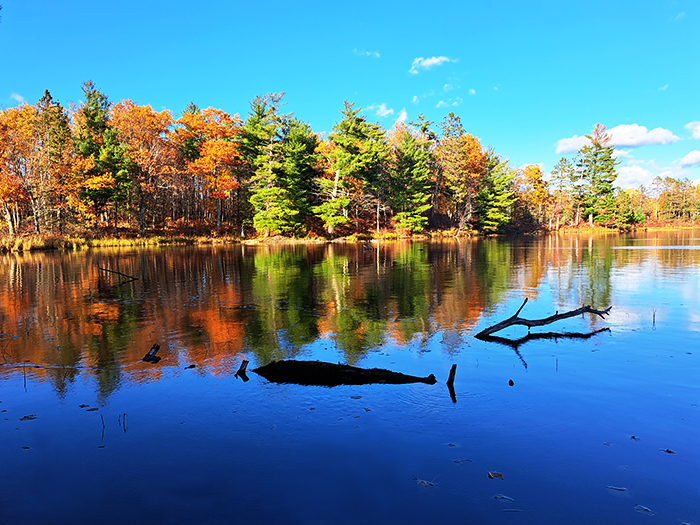 Shumway Lake Savannah Portage State Park - Tom Anderson
Corporations have rights. The ships carrying away mined materials have rights. Why not the very bodies of water whose lives are most impacted by these activities?
These past two months have been a big push for our communities to comment on the proposed Talon Mine Environmental Impact Statement. We've brought our energy together to protect water, wild rice, fish, human health and treaty rights.
Throughout this time, I've also been reflecting on the limitations of this process, and how Rights of Nature could transform our system of environmental protection. As I've also witnessed with PolyMet (now NorthMet) at the headwaters of Lake Superior, communities are repeatedly asked to engage in a process where the terms have already been established by those who stand to gain, beginning with a premise that nature is a resource: an object to use. The project comes first, then we are asked to demonstrate why it shouldn't happen, or how its impacts should be reduced. In this system, pollution is managed or regulated. As concerned citizens, our actions respond to these terms.
But what if communities didn't only have to respond within the box of terms given to us? What if we also asserted something more fundamental about the places we love, the ecosystems we care for?
Rights of nature starts from a very different premise: ecosystems and bodies of water aren't simply objects to use, resources for human disposal, whose degradation must be regulated. They are living beings with the inherent rights to thrive, flourish, and regenerate. This shifts the question from how much pollution is allowed, to what does this ecosystem need in order to be healthy?
While we certainly need to continue all the work to defend Tamarack within the regulatory system, Rights of Nature offers another pathway – to step outside of this system of managing pollution, into rights-based law that establishes legal rights for ecosystems. In this emerging legal framework, which comes from Indigenous worldviews integrated into the Western legal system, citizens of any place can work together to pass laws on behalf of the ecosystems they love.
Rather than working within the predetermined actions allowed by the state permitting system, rights of nature places the power in people's hands to establish constitution-type rights for nature that could eventually take precedence over regulations.
We can learn from other countries that have passed Rights of Nature laws: New Zealand, Bolivia, Colombia, Spain, and in particular Ecuador, where a Rights of Nature law was used to strike down mining permits in Los Cedros Forest. Here in Minnesota, White Earth Nation's Rights of Manoomin law recognizes wild rice as a rights-bearing being and created a mechanism to defend those rights in tribal court.
There are grassroots initiatives popping up in towns and cities around the country motivated by individuals and communities who are committed to transforming how we relate to nature, both culturally and legally.
In Duluth, we are working towards eventual recognition of a Rights of Nature law for Gitchigami-ziibi (the St. Louis River Estuary) which is the largest US tributary to Lake Superior, and is downstream from the proposed NorthMet (formerly PolyMet) copper mine. We seek to transform how our community relates to water; rather than a resource to use (and abuse), this ecosystem is a living being. By stepping outside the regulatory system to expand what and who has rights, we aim to build long long-term protections that start with terms defined by our community, and by the laws of nature: water is life.
On October 7th I'll be introducing Rights of Nature. We'll look at how it's been applied in response to mining and extraction around the world, and explore possibilities for a growing Rights of Nature movement in Minnesota.
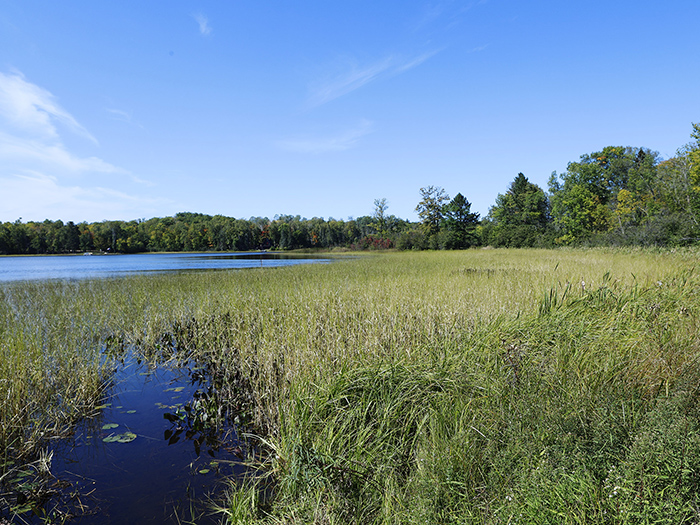 Wild rice -Savannah Portage State Park-Lynn Anderson
Far from Boundary Waters Mille Lacs tribe resists another copper-nickel mine
"The Tamarack Mining Project, unaffected by Gov. Tim Walz's recent executive order on nonferrous mineral mining, is moving through the regulatory process." For Kelly Applegate, commissioner of natural resources for the Mille Lacs Band, Rice Lake Natural Wildlife Refuge is a sweeping wetland one hour west of Duluth, and by his estimation, the crown jewel of wild rice-or manoomin, in Ojibwe.
"...For tribal members, the mine sounds like short-term economic gains in exchange for long-term costs, said Virgil Wind, chief executive of the Mille Lacs Band. He borrowed an analogy from Applegate to describe the dangers of mining in his region..."
"It's like drilling a hole in a wet sponge and then thinking water isn't going to come in," he said...
"...Wind and Applegate hope the next state leaders will see that a majority of the state prioritizes protecting water, whether it be in the Boundary Waters or around Rice Lake. ..."
Arola, Brian, Sept. 14, 2026, MinnPost
https://www.minnpost.com/environment/2026/09/far-from-the-boundary-waters-the-mille-lacs-tribe-resists-another-copper-nickel-mine/
Minntac needs to clean up mining pollution now, not in 2071
"...Nippon Steel has committed hundreds of millions of dollars to modernize Minntac and Keetac. If the company can invest in producing steel, it can invest in protecting Minnesota's water. The problem is that it is more profitable not to protect water, especially when they've gotten away with it for decades without penalties... "
"...That's why Grand Portage and Bois Forte leaders gathered last week at Grand Portage to call on Minnesota to conduct a Generic Environmental Impact Statement (GEIS), examining the cumulative effects of extraction across the 1854 Treaty ceded territory. We are asking the state to complete this study before it approves more new mining projects..."
"...Minnesota's process evaluates mining projects one at a time, but water doesn't recognize permit boundaries, and neither do wild rice, fish, moose or the people who depend on them. A GEIS would give Minnesota something it doesn't have now: a regional picture of the health of our waters and natural resources after decades of extraction, and an understanding of how much more sulfate, mercury and other pollution those systems can withstand..."
Deschampe, Robert, Sept. 29, 2026, Star Tribune
https://replica.startribune.com/infinity/article_popover_share.aspx?guid=f883e20c-bf56-4b8b-8163-5b7e801eb9f4&share=true
Tamarack Water Alliance is a group of local residents and landowners working together with others from across Minnesota to protect water and community health from the dangers of sulfide mining near our beloved lakes and wild rice beds, at the headwaters of the Kettle River and in the Mississippi River watershed. Visit our website here (https://tamarackwateralliance.org/index.html).
A proposal by a foreign owned mining company, Talon Metals/Rio Tinto to mine nickel and other metals near Tamarack in Aitkin County threatens the health of our communities. This kind of sulfide mining, especially in water-rich environments, has never been done without severe impacts to water and the health of those downstream. Mining here is also a threat to environmental justice and the long-term economic security of nearby native and rural communities.
Review our community slide presentation (tamarackwateralliance.org/docs/TamarackMineConcerns-Consolidated.pdf) and download informative flyers (tamarackwateralliance.org/resources.html):
We will send this monthly newsletter to keep you informed about this project, to share information and opportunities to act to protect clean water and community health.
Copyright . Tamarack Water Alliance. All Rights Reserved.